 Civil Resilience
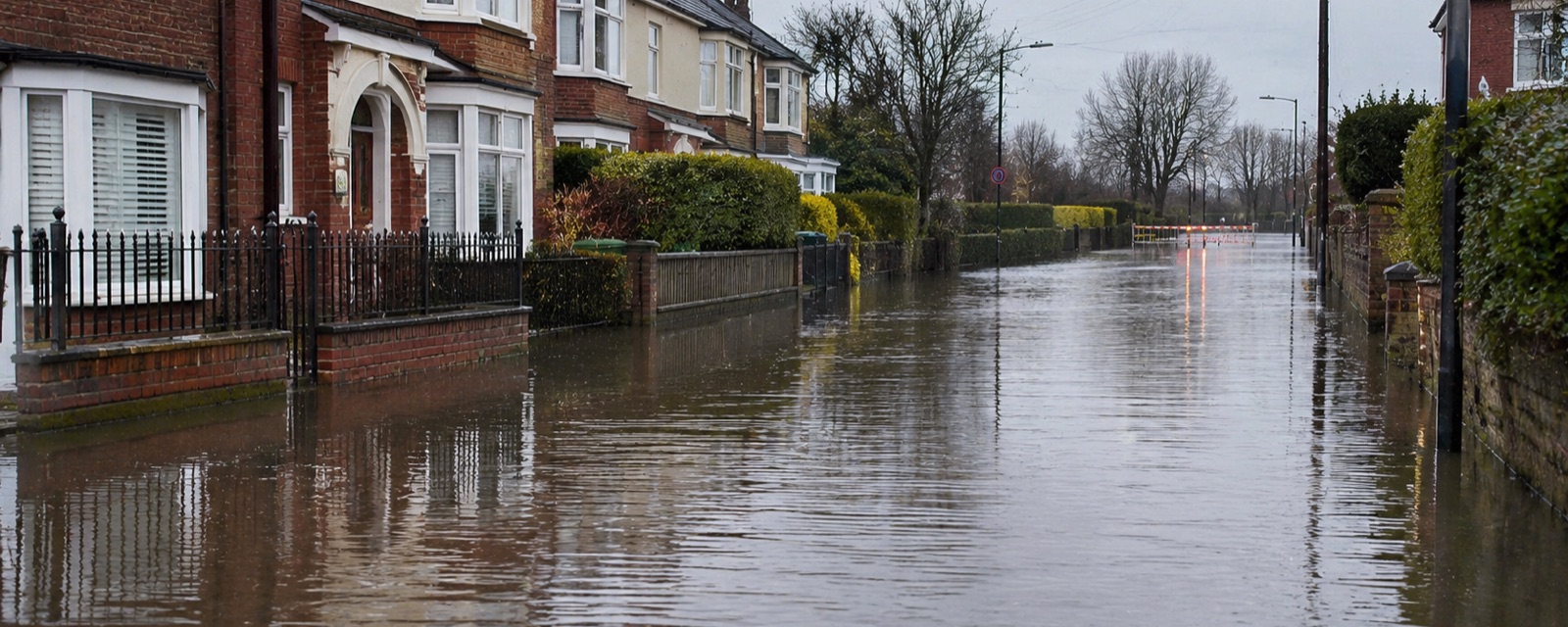
Flooding
The four sources of flooding, what the three Environment Agency warning levels mean, how to sign up, and what to do before, during and after water enters a home.
- Environment
What it is
Flooding comes from rivers, the sea, surface water after rain, and groundwater. Be Ready says around 6.3 million properties in England are in areas at risk from one or more of these sources. A flood damages a home and belongings, can cost thousands of pounds, disrupts life and causes emotional distress. The people most at risk are those who live in a flood risk area, which you can check for England on gov.uk, for Wales through Natural Resources Wales, for Scotland through SEPA and for Northern Ireland through nidirect.
What it does to a home
Water enters at ground level and can carry sewage. Gas, electricity and water need to be turned off while it is safe. The stop tap is usually inside where the supply enters, or outside near the boundary under a cover; the gas valve sits by the meter; the electricity cut-off is the main switch on the fuse board. Property changes can reduce the damage, and gov.uk explains how to adapt a home or business to flood risk. Owners of riverside or canalside property have responsibilities set out in guidance on owning a watercourse. If a home is uninhabitable, the council can help with emergency accommodation. A flood can also bring a power cut, a water supply interruption and a phone and broadband outage.
Who warns you
The Environment Agency's service covers rivers, the sea and groundwater in England and is free. It cannot warn of surface water flooding, sometimes called flash flooding; for that, gov.uk says to contact your council. There are three levels. A flood alert means flooding is possible. A flood warning means flooding is expected. A severe flood warning means there is a danger to life. The check for flooding service shows current warnings, river, sea, groundwater and rainfall levels, and the flood risk for the next five days. Floodline is a 24-hour service for England, Scotland and Wales. Severe river or coastal flooding in England can be reported to the Environment Agency on a line listed on the Be Ready page, and some flooding must be reported to the council.
The UK Emergency Alerts system can send a siren-like message to every compatible phone in an area, and severe flooding is one of its examples. From October 2026 the Met Office, the four hydrological agencies and the Flood Forecasting Centre use one harmonised impact matrix across weather warnings and flood guidance statements.
How the government assesses it
The National Risk Register 2025 treats coastal, fluvial and surface water flooding as three risks. The coastal reasonable worst case is flooding along the east coast of England affecting a very large number of homes, with five to seven days of forecasts and severe flood warnings at least 24 hours ahead. The fluvial case is a major river flood after two weeks of rain, overtopping and breaching defences, with power and telecoms lost for days to weeks. Surface water flooding is the hardest to forecast, with areas at risk warned only 6 to 24 hours ahead. The Flood Forecasting Centre aims for at least three days' lead time for coastal and river events, the Environment Agency leads operational response through the local resilience forum, and over 100 specialist flood rescue teams stand ready. Recovery from the worst cases would run beyond two years.
Where to look
- gov.uk/check-flooding, gov.uk/sign-up-for-flood-warnings and Floodline on 0345 988 1188.
- Flood Re at floodre.co.uk and public health advice on flooding at gov.uk.
- Related pages: storms, power cuts, water supply interruptions.
Before
- Check your long-term flood risk at gov.uk/check-long-term-flood-risk, or the equivalent for Wales, Scotland or Northern Ireland.
- Sign up for flood warnings at gov.uk/sign-up-for-flood-warnings, or by calling Floodline on 0345 988 1188. Floodline can send warnings to a friend or relative on your behalf if you need extra help.
- Make a personal flood plan, using the template on gov.uk.
- Pack a grab bag with medication, a first aid kit, documents, a torch, bottled water, warm waterproof clothing and baby items, and keep it where you can reach it.
- Move valuable and sentimental items upstairs or to a high shelf, and put documents such as birth certificates in resealable watertight bags.
- Know where your water stop tap, gas shut-off valve and electricity cut-off switch are, and check your insurance.
During
- Check flooding for the next five days at gov.uk/check-flooding.
- Turn off gas, electricity and water if it is safe to do so. Never touch an electrical switch while standing in water.
- Move family, vehicles, pets and important items upstairs or to higher ground, and fit any flood barriers or air brick covers you have.
- Evacuate when the council or emergency services ask you to. Delay puts your life and rescuers' lives at risk.
- Never walk through flood water. It can hide sewage, wreckage, uneven ground and open drain covers.
- If you meet a flooded road, turn around. Driving through flood water is the leading cause of death in floods.
After
- Stay out of flood water unless you must enter. Levels can rise and fall for weeks and the water is deeper than it looks.
- Wash hands with warm soapy water after any contact with flood water, sewage or anything that was in it.
- Photograph or film all damage, mark the water level on the wall before it recedes, and get your insurer's approval before any repair. Throw nothing away until told to.
- If you are uninsured, ask your council about hardship grants and charities. Flood Re helps people who have been flooded find more affordable insurance.
Sources
Last updated 29 October 2026. Reviewed 29 October 2026